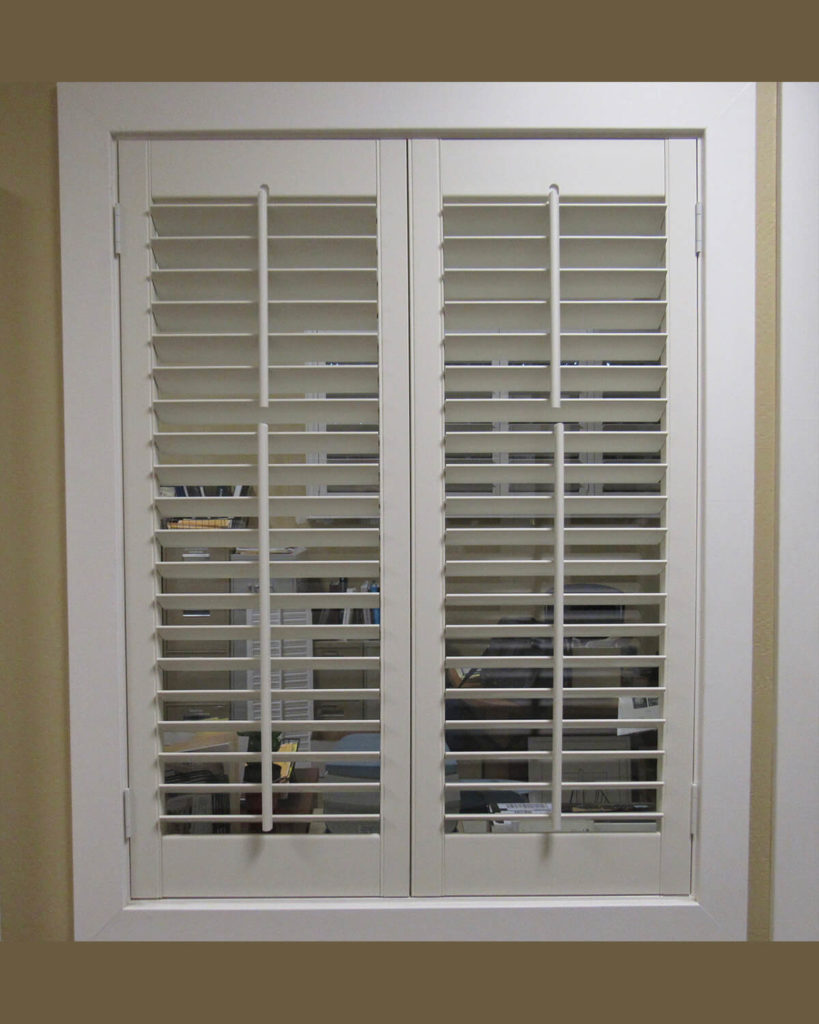
On a standard plantation shutter, a single tilt rod connects all the louvers in a panel, so they all move together as one. A split tilt rod divides that control into two separate sections on the same panel, allowing the upper and lower louvers to be adjusted independently of each other. It is one of the most practical configuration options available, and one that many homeowners find genuinely changes how they use their shutters day to day.
How Split Tilt Works
With split tilt shutters, you can angle the top louvers open to bring in natural light and a view of the sky while keeping the lower louvers closed for privacy at street level. Or reverse it — close the upper section to block harsh sun glare from above while tilting the lower louvers to let in softer light. The two sections can be set to any angle independently, giving you a level of precision that a single tilt rod simply cannot provide.
When Split Controls Make Sense
Split tilt is particularly useful on large windows, street-facing rooms, and anywhere the balance between light and privacy changes throughout the day. Living rooms, dining rooms, and home offices are common applications. The configuration works within a full-length panel without requiring a physical divider rail, keeping the look of the shutter clean and uninterrupted.
Our split tilt shutters are available in premium basswood, synthetic aluminum-reinforced PVC, or composite MDF. San Francisco Shutters serves homeowners across San Francisco, the Peninsula, and the greater Bay Area. Stop by our South San Francisco showroom or contact us to see split control displays in person.